
Trail Water Filter Guide: Straw vs. Pump vs. Gravity Filtration (2026)
The definitive backcountry trail water filter comparison. Discover how 0.01-micron hollow-fiber straws, mechanical hand pumps, and gravity reservoirs eliminate waterborne pathogens.
WildRoot Field Research
WildRoot Field Testing & Research Team
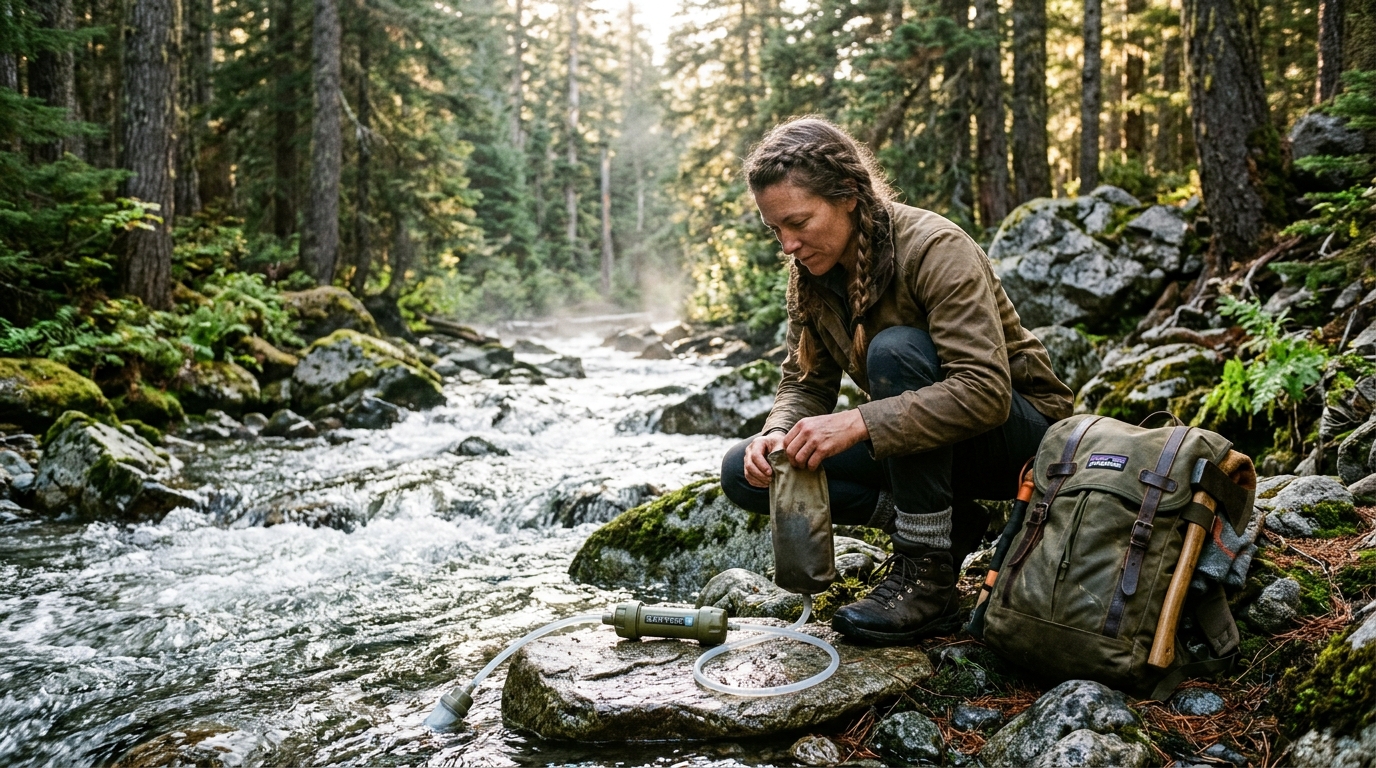
Nothing terminates a backcountry expedition faster than waterborne pathogens. Microscopic protozoan cysts like Giardia lamblia (“beaver fever”), virulent bacteria like Salmonella and E. coli, and heavy riverbed silt lurk inside even the most pristine-looking alpine mountain brooks.
In the foundational framework of The 10 C’s of Wilderness Survivability, water management is traditionally anchored around the Container—a single-wall metal pot or canteen used to boil water over hot campfire coals.
While boiling remains 100% biologically effective (as outlined in our Campfire Safety & Leave No Trace Guide), boiling requires stopping, processing kindling with a Full-Tang Bushcraft Knife, igniting tinder, and waiting 45 minutes for scalding liquid to cool down.
For modern backpackers, ultralight thru-hikers, and preppers outfitting their 72-Hour Bug Out Kit Checklist, portable micro-filtration is the fastest, lightest, and most fuel-efficient hydration strategy.
Below is our field-tested breakdown of the three primary technologies: Filter Straws, Mechanical Hand Pumps, and Gravity Bag Systems, complete with our Master Pathogen Elimination Matrix.
Waterborne Pathogen Elimination Matrix
Before investing in filtration gear, understand what you are actually defending against:
| Pathogen / Contaminant | Physical Size | Primary Threat | 0.01-Micron Straw Filter | Dual-Stage Mechanical Pump | Rolling Boil (Campfire) |
|---|---|---|---|---|---|
| Protozoan Cysts (Giardia, Crypto) | 1.0 – 5.0 Microns | Severe diarrhea, cramps, dehydration | 100% Removed (Exceeds pore size) | 100% Removed | 100% Neutralized |
| Bacteria (E. coli, Salmonella, Cholera) | 0.2 – 1.0 Microns | Acute gastrointestinal infection | 99.9999% Removed | 99.9999% Removed | 100% Neutralized |
| Microplastics & Suspended Silt | 1.0 – 100 Microns | Membrane clogging, internal toxicity | 100% Blocked | 100% Blocked (Dual Pre-filter) | Does not remove |
| Agricultural Chemicals & Chlorine | Molecular (<0.001µm) | Pesticides, synthetic runoff, bad taste | Partial | 99% Removed (Activated Carbon) | Does not remove |
| Viruses (Hepatitis A, Norovirus) | 0.02 – 0.08 Microns | Systemic organ infection (rare in wild US) | Does not block | Requires chemical tablet pairing | 100% Neutralized |
1. The Survival Water Straw (Ultralight Solo Fast-Packer)
Best For: Day hikers, trail runners, ultralight fast-packers, and emergency bug-out chest rigs.
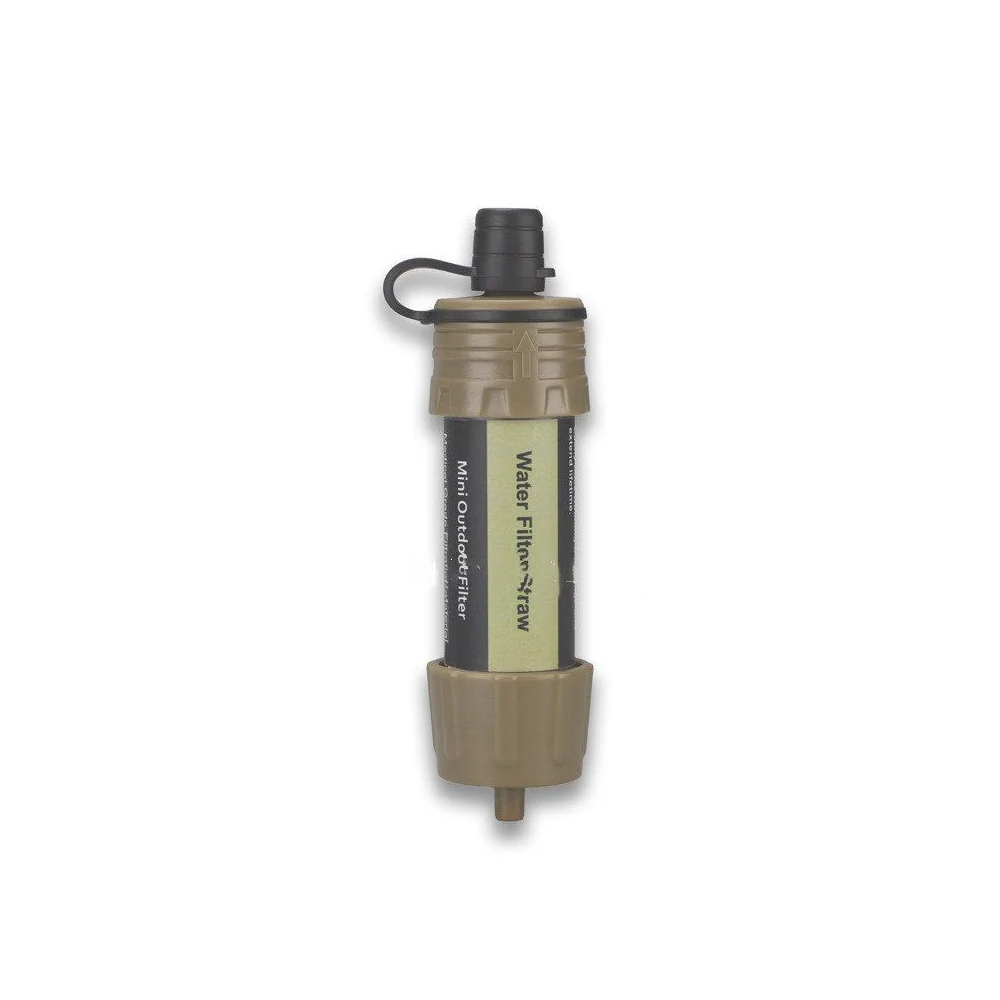
The Mini Portable Survival Water Purifier Straw utilizes medical-grade 0.01-micron hollow-fiber membrane bundles. Water is drawn directly through thousands of microscopic capillaries that physically trap bacteria, cysts, and microplastics without chemicals.
[Untreated Stream Water] ──► [0.01-Micron Hollow Fibers] ──► [Clean Drinking Water]
                             (Traps 99.9999% Bacteria)
Advantages:
- Featherweight Form Factor: Weighs under 60 grams (2 oz), slipping effortlessly into shoulder harness webbing or EDC pouches.
- Immediate On-Demand Hydration: Zero hoses, priming pumps, or assembly required. Kneel beside the creek bank and sip directly from the stream flow.
- Massive 5,000-Liter Lifespan: Cleans up to 1,320 gallons of freshwater before requiring replacement, restored via simple syringe backflushing.
Limitations:
- Cannot easily store bulk water in camp for rehydrating freeze-dried meals or boiling morning coffee without squeeze pouch attachments.
- Requires lung suction effort, which can feel fatiguing after an exhausting 4,000-foot alpine ascent.
Field Recommendation: The Mini Portable Survival Water Purifier Straw is the ultimate solo emergency insurance. At $24.99, keep one permanently tethered to your pack chest strap.
2. The Mechanical Hand Pump (The Backcountry Workhorse)
Best For: Multiday backpackers, hunters, bushcrafters, and arid wilderness terrain with shallow water pools.
When seasonal mountain streams dry down into half-inch shallow mud pools, gravity bags cannot submerge and straws suck in heavy bottom muck. The Emergency Hand-Powered Drinking Water Filtration Pump features an intake hose with a weighted float and dual-stage filtration:
[Muddy Puddle] ──► [Pre-Filter Float] ──► [Hollow-Fiber Core] ──► [Activated Carbon Block] ──► [Clean Canteen]
                   (Blocks Leaves)        (Blocks Pathogens)      (Eliminates Odor/Chemicals)
Advantages:
- Puddle Extraction Capability: Functions in water levels as shallow as a single finger’s depth without disturbing bottom silt.
- High Flow Velocity: Delivers between 1,000ml to 1,400ml of clean drinking water per minute directly into your wide-mouth canteen or Borosilicate Bushcraft Thermal Flask.
- Dual-Stage Carbon Taste Clarification: The internal activated carbon core strips sulfur swamp odors, agricultural runoff, and heavy metals, transforming muddy river water into crisp spring water.
Limitations:
- Carries a heavier pack footprint (~250g) and requires coiling two silicone hoses.
- Requires two-handed manual pumping effort.
Field Recommendation: For remote hunting treks and basecamp excursions, the Emergency Hand-Powered Drinking Water Filtration Pump is an indestructible mechanical workhorse ($39.99).
3. Gravity Filtration Systems (Basecamp & Squad Luxury)
Best For: Remote group expeditions, family overnights, hunting basecamps, and lazy evenings around the fire.
Fill a durable reservoir bag—or a multi-purpose Collapsible Camp Basin Waterproof Dry Bag—from the water source, hoist it five to six feet high on a sturdy pine limb, connect the clean tubing line, and let gravity do 100% of the manual labor while you construct your Bombproof Tarp Shelter.
Advantages:
- Zero Physical Labor: Effortlessly clarifies 3 to 10 liters simultaneously while you gather firewood or cook dinner.
- Squad Volume: Generates enough clean water to supply hydration bladders and camp dishwashing for 4 to 6 people without anyone sweating over a pump lever.
Technical Specifications Comparison
| Feature | Mini Purifier Straw (0.01µm) | Emergency Mechanical Hand Pump | Gravity Bag Reservoir |
|---|---|---|---|
| Weight | Under 60g (2.1 oz) | 250g (8.8 oz) | 280g (9.8 oz) |
| Flow Rate | Instant oral draw | 1,400 ml/min | 1,000 ml/min (Hands-Free) |
| Shallow Water Puddles | Difficult | Exceptional | Poor (Requires Submersion) |
| Camp Cooking / Stews | Poor | Very Good | Outstanding |
| Taste Improvement | None | High (Activated Carbon) | Low |
| Field Maintenance | Backflush syringe | Washable pre-filter sponge | Backflush tubing |
| Best Tactical Use | Solo Hiking / Fast Bug-Out | Wilderness Expeditions | Group Campouts & Cabins |
The Sub-Zero Freezing Trap: How Cold Kills Hollow-Fiber Filters
The single biggest beginner mistake in cold-weather backpacking is leaving a wet water filter inside an external backpack pocket overnight during sub-freezing temperatures.
The Physics of Filter Failure:
- Hollow-fiber membranes contain thousands of microscopic tubules filled with residual water.
- When temperatures dip below 32°F (0°C), that trapped water expands into ice crystals.
- The expanding ice ruptures the ultra-thin capillary walls.
- The Dangerous Part: The exterior plastic housing looks 100% intact, but the microscopic pores are now blown wide open. Water flows through fast, but bacteria and Giardia cysts pass directly into your mouth unnoticed.
❄️ Woodsman Freezing Defense: In late autumn, winter, or high-altitude terrain, always keep your water filter in an inner zippered chest pocket while hiking. At night, place the filter inside a sealed zip-top bag and sleep with it at the bottom of your sleeping bag so your body heat keeps it above freezing.
Field Maintenance: Restoring Clogged Flow Velocity
If your filter straw or pump flow slows to a trickle after filtering glacial silt or muddy rainwater, follow this 60-second backwash protocol:
- Fill the included clean-water syringe with clean drinking water.
- Seat the syringe nozzle firmly against the clean outflow spout (reverse direction).
- Vigorously depress the plunger to blast water backward through the fibers, dislodging trapped sediment out of the intake side.
- Repeat 3 times until the discharged flush water runs crystal clear.
The Master Woodsman Hydration Strategy
No single purification tool conquers every outdoor contingency. Seasoned backcountry professionals deploy a two-tier tactical hydration system:
- Keep the Mini Portable Survival Water Purifier Straw strapped to your pack chest harness for rapid, effortless trail sips without taking off your rucksack.
- Pack the Emergency Hand-Powered Drinking Water Filtration Pump in your main pack body to process bulk water for cooking, refilling your Borosilicate Bushcraft Thermal Flask, and pumping from shallow muddy puddles.
Ensure your entire preparedness system aligns with the foundational survival disciplines:
Expert Wilderness & Field Gear FAQs
Clear, field-tested answers to the most common questions on backcountry readiness, survival gear, and equipment maintenance.
QDo survival straw water filters remove Giardia and Cryptosporidium?▼
QDo trail water filters remove viruses and chemical toxins?▼
QHow many liters does a portable trail water filter last?▼
QWhat happens if a hollow-fiber water filter freezes?▼
QIs boiling water better than using a trail water filter?▼
Wilderness Equipment Featured in this Guide
The rugged gear relied upon by our instructors. Pre-tested in North American forests and shipped fast from California & New Jersey.
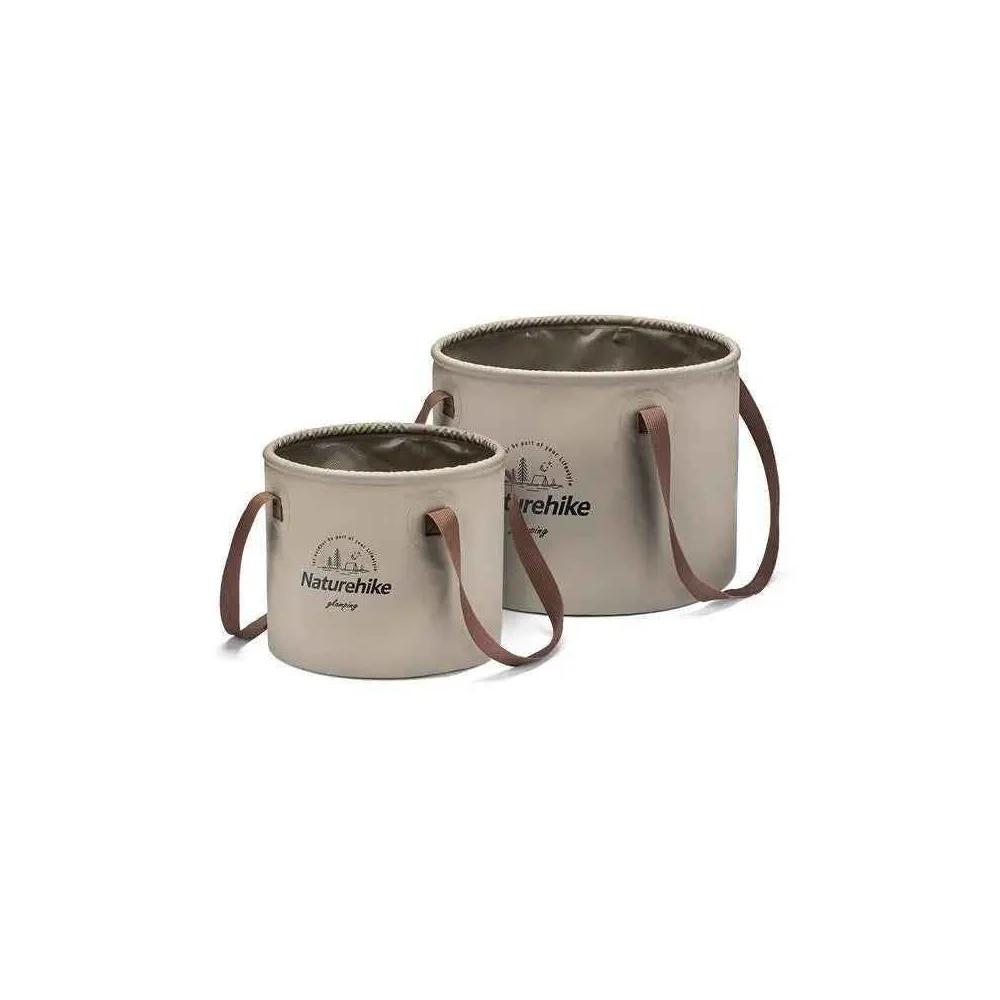
Heavy-Duty Waterproof PVC Bucket Collapsible Camp Basin (20L)
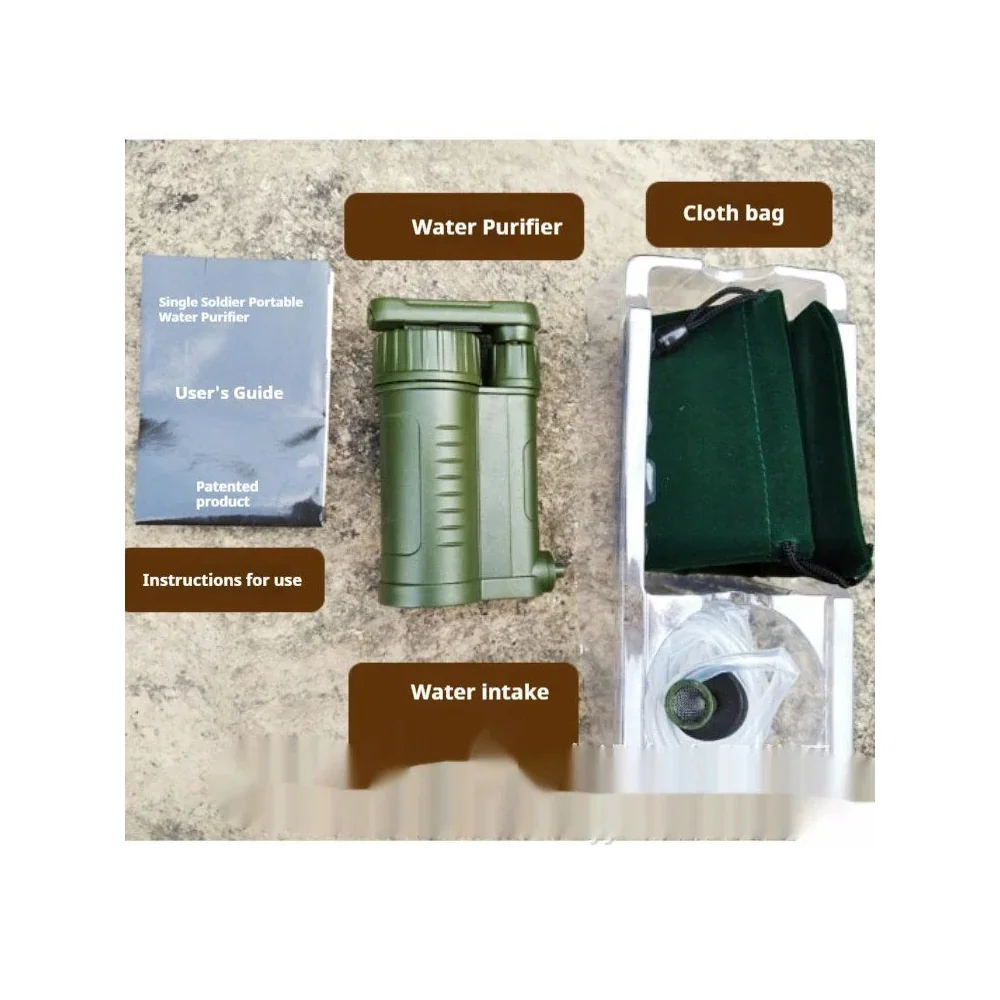
Emergency Backcountry Water Filtration Pump & Gravity System